Heavy-Duty Rolling Clothing Rack: Capacity & Caster Tips
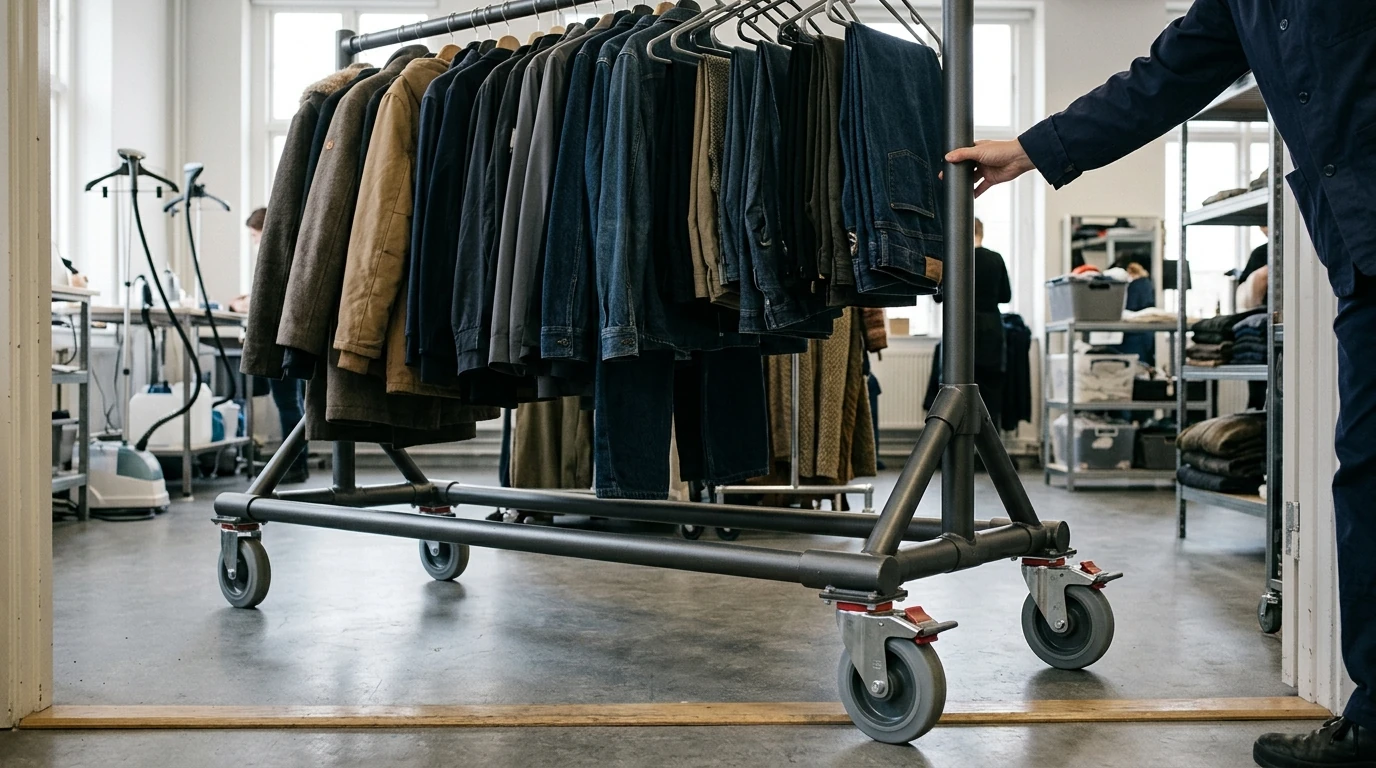
Heavy Duty Rolling Clothing Rack for Busy Closets, Studios, and Retail Floors
A sturdy rolling rack makes it easier to move, sort, and protect garments without sagging rails or wobbly frames. The right heavy-duty rolling clothing rack can carry dense loads—coats, denim, uniforms, costumes—while still gliding across a room without snagging hangers or threatening a tip-over. Below is a practical guide to what matters most: capacity, wheels, stability, and setup, plus smart ways to use a heavy-duty rack in real spaces.
What a heavy-duty rolling rack does better than a standard rack
A basic clothing rack can be fine for a handful of shirts, but busy homes and fast-moving workspaces quickly reveal the weak points: flexing rails, drifting wheels, and frames that loosen after a few moves. A heavy-duty rolling rack is built to handle the daily friction of loading, rolling, parking, and reloading.
- Handles higher garment loads without bending the top bar or loosening joints over time.
- Moves more smoothly even when fully loaded, reducing snagging and tipping during turns.
- Creates flexible storage for seasonal rotation, steaming, styling, and overflow closets.
- Fits fast-paced environments like pop-ups, showrooms, laundry rooms, and backstage wardrobe areas.
For a simple, mobile solution designed for heavier loads, the Heavy Duty Rolling Clothing Rack is a practical option for garment staging, temporary closet expansion, and on-the-go organizing.
Key features that determine strength and stability
Two racks can look similar online and perform very differently once they’re loaded with winter outerwear or a full run of retail sizes. Focus on how the rack is built—not just how it looks.
Frame material and tubing thickness
Thicker metal tubing and reinforced joints resist flex and side-to-side sway. If a rack wobbles empty, it will feel worse under load and may loosen faster from vibration when rolling.
Rail design and support
A solid, well-supported top bar reduces bowing. End caps are more than cosmetic: they help keep hangers from sliding off when you push the rack around corners or over thresholds.
Base width and footprint
A wider base improves balance, especially when rolling over rugs, elevator seams, or doorway lips. If the rack will hold heavy coats, prioritize footprint and stance over a super-slim design.
Caster quality (and locks)
Larger casters roll more easily and track better on imperfect floors. Locking casters help prevent drifting while loading, steaming, photographing outfits, or letting customers browse. If safety is a concern in shared spaces, review general consumer safety guidance from the U.S. Consumer Product Safety Commission (CPSC).
Weight distribution habits
Even a strong rack can feel unstable if it’s loaded unevenly. Heavy garments should be spaced across the bar to avoid pulling the rack off-center—especially while rolling. For workplaces, it’s also worth aligning practices with general safe handling recommendations like those covered by OSHA materials handling guidance.
Quick spec check: what to compare before buying
A few quick measurements and a realistic load estimate prevent most “this looked bigger online” surprises. Before purchasing, check the space you’ll actually use, the floor you’ll roll on, and the heaviest items you’ll hang.
- Measure available floor space and height clearance under shelves, closet rods, or door frames.
- Estimate the heaviest expected load (winter coats, denim, costumes) and leave a buffer for movement.
- Confirm wheel type for the floor: hard wheels can be rough on hardwood and may struggle on thick carpet; softer casters can be gentler on hard floors.
- Look for locking casters if the rack will be used for steaming, photography, pop-ups, or retail browsing.
Rolling rack comparison checklist
| Feature | Why it matters | What to look for |
|---|---|---|
| Load capacity | Prevents bending and wobble under heavy garments | Rated capacity with reinforced joints and stable base |
| Caster size | Improves rolling on carpet seams and thresholds | Larger casters; smooth swivel action |
| Wheel locks | Keeps rack steady while loading or steaming | At least 2 locking casters |
| Base width | Reduces tipping when moving | Wider footprint for heavy outerwear |
| Assembly hardware | Affects long-term tightness and squeaks | Quality bolts/screws; clear instructions |
Smart ways to use a rolling rack (beyond extra closet space)
To support the “mobile studio” side of organizing—especially for creators and pop-up teams—pairing your rack with a few everyday essentials can help. A compact organizer kit might include a protective carry option like the Premium Laptop Sleeve for MacBook Air Pro 13–16 Inch for on-site planning, and a reliable backup power option like the 30W Portable Power Bank for Apple Devices when outlets aren’t convenient.
Care, maintenance, and safety tips for long-term performance
Product spotlight: Heavy Duty Rolling Clothing Rack
If you need flexible hanging space that can move from closet to laundry room to studio without feeling flimsy, the Heavy Duty Rolling Clothing Rack is designed for practical, everyday use. It’s a strong option for overflow storage, garment staging, and mobile organization—especially in households, studios, and small retail setups that need rollable capacity.
FAQ
How much weight can a heavy-duty rolling clothing rack hold?
Capacity varies by model and construction, so the safest approach is to check the rack’s rated load and plan for your heaviest items (like coats or denim). Leave a buffer so the rack can roll without strain and so the frame stays stable when turning.
Do rolling clothing racks work on carpet?
Yes, but performance depends on caster size and the type of carpet. Larger casters roll better, and keeping the load reasonable helps prevent drag; if possible, roll along smoother paths and avoid thick transitions.
How do you keep a rolling clothing rack from tipping?
Choose a rack with a wider base, distribute weight evenly across the rail, and lock the wheels while loading and unloading. When moving it, push from the frame rather than pulling from the top bar, and take thresholds slowly.





Leave a comment