Stainless Manual Dicer: 1/4 & 3/8 In Commercial Prep
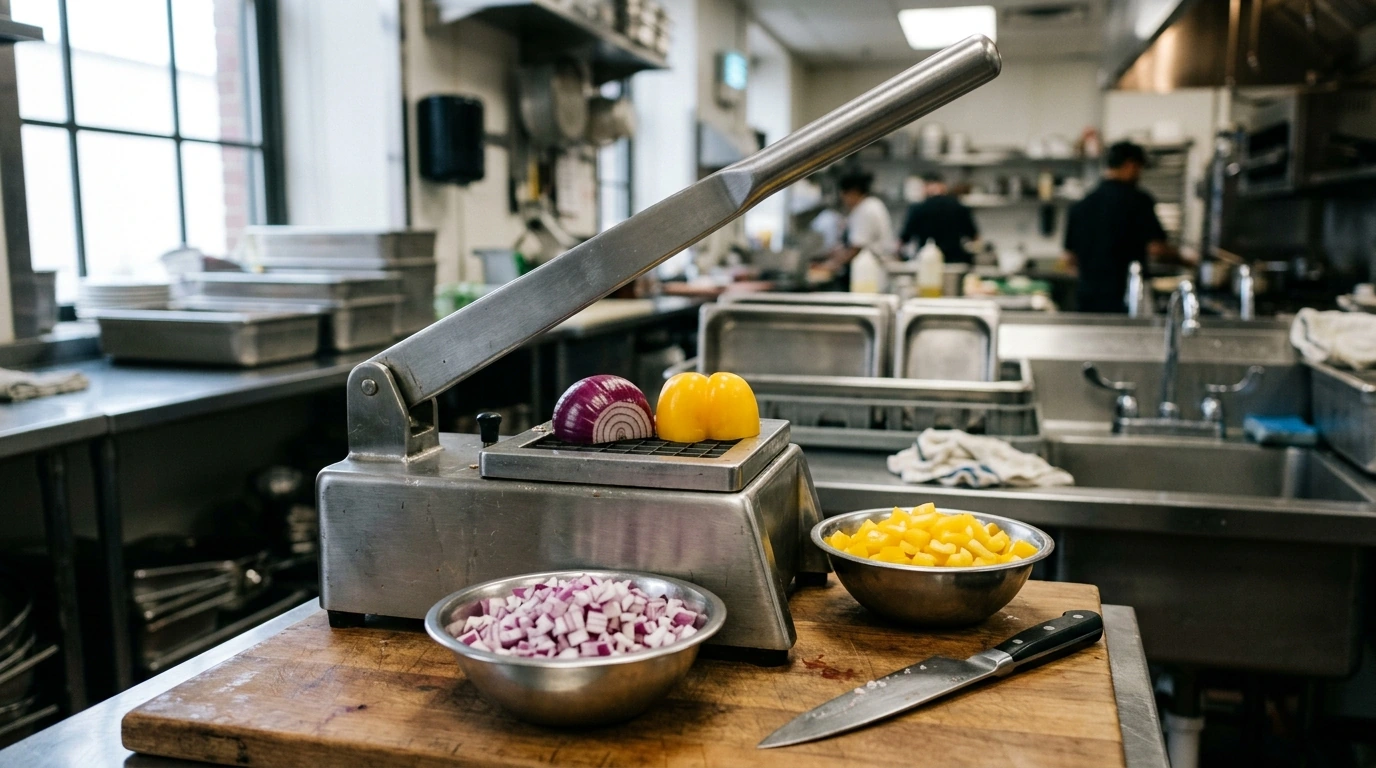
Commercial Manual Vegetable & Fruit Dicer Cutter (3/8″ & 1/4″) — Stainless Steel Prep Tool
Fast, uniform dicing keeps prep consistent during rush periods and helps reduce hand fatigue over long shifts. A stainless steel manual dicer is built for high-volume kitchens that need repeatable results, offering two common cube sizes (3/8″ and 1/4″) for salads, salsas, soups, and garnish work—without plugging in or sacrificing counter space to a bulky machine. With a lever-style press and a dedicated cutting grid, you can turn trimmed produce into clean cubes that portion well, plate neatly, and cook more evenly.
What This Dicer Is Used For
A manual dice cutter earns its spot on the prep line when you’re processing the same ingredients again and again. Instead of chasing consistency with a knife during peak hours, the grid-and-pusher design produces uniform cubes in a single motion once items are trimmed to fit.
- Speeds up repetitive prep for onions, tomatoes, peppers, cucumbers, potatoes, and many firm fruits
- Creates uniform cubes for even cooking, consistent portioning, and cleaner plating
- Supports batch prep for food trucks, cafés, catering, and meal prep operations
- Manual operation keeps it portable and usable anywhere—no outlet required
Uniformity is more than looks: matching cube size helps ingredients cook at the same rate, reduces overcooked edges, and improves yield control when you’re portioning deli containers or hotel pans.
Two Dice Sizes: When to Use 1/4″ vs 3/8″
Having two grids covers most day-to-day prep: a finer dice for quick-cooking applications and toppings, plus a slightly larger cube that holds texture in hearty dishes. Choosing the right size also affects moisture release—smaller dice can “weep” faster, which matters for tomatoes, cucumbers, and fruit held on a line.
- 1/4″ dice: ideal for salsas, relishes, mirepoix, toppings, and finer textures that hold together
- 3/8″ dice: better for chunkier soups, stews, roasted vegetables, home fries, and hearty salads
- Keeping both sizes on hand reduces the need for multiple knives and cutting boards during service
- Choose the size based on cook time, mouthfeel, and how the ingredient releases moisture (smaller dice can weep more)
Dice Size Quick Guide
| Dice size | Best for | Typical ingredients | Notes |
|---|---|---|---|
| 1/4″ | Salsa, relish, toppings, fine prep | Onion, tomato (firm), cucumber, peppers, apples | Smaller cubes cook faster and blend more evenly |
| 3/8″ | Soups, stews, roasting, chunky salads | Potato, carrots, zucchini, melon, firm pears | More bite; holds shape well in long cooks |
Build and Kitchen-Friendly Materials
In commercial prep, a dicer has to handle daily cycles of use, rinsing, sanitizing, and storage without becoming a maintenance project. Stainless steel construction helps support frequent cleaning and provides the durability expected in food-prep environments where repeatable results matter.
- Stainless steel construction supports frequent cleaning and heavy daily use
- Designed for food-prep environments where durability and repeatable results matter
- Smooth surfaces help simplify wipe-downs and reduce places for food to catch
- Manual lever-style cutting action helps produce consistent cuts with less repetitive knife work
Manual operation also keeps your workflow flexible: you can move the unit to wherever the prep space opens up, set it near the sink for quick rinses between ingredients, or use it in a food truck where power is limited.
How to Use for Cleaner, Faster Cuts
The best-looking dice starts before the press. The grid will only cut as cleanly as the ingredient is prepped to fit, especially with tapered items (onions) or slick skins (peppers, tomatoes). A few small habits reduce jams and improve cube consistency.
- Prep the ingredient: wash, peel if needed, and trim to fit the cutting area for a single press
- Aim for firm, evenly sized pieces before dicing to reduce wedging and uneven cubes
- Use steady, controlled pressure rather than rapid force to avoid crushing softer produce
- For high-moisture items (tomatoes, ripe fruit), chill briefly to firm up before dicing
- Clear the grid between batches to keep cuts consistent and avoid buildup
For onions, halve and trim to create a flatter surface so the pusher contacts evenly. For potatoes, keep pieces closer in thickness so the grid doesn’t struggle with a “wedge” that tries to twist during the press. If you’re rotating through multiple ingredients, a quick rinse and brush-out between items helps maintain clean edges and reduces flavor transfer.
Cleaning, Sanitizing, and Daily Care
For broader sanitation guidance and best practices, reference the USDA FSIS kitchen sanitation resources and the FDA Food Code. If you’re equipping a commercial kitchen, it’s also helpful to understand how standards are evaluated; NSF provides an overview of food equipment standards.
Safety Tips for Busy Prep Stations
When This Tool Is the Right Fit
In-Stock Picks
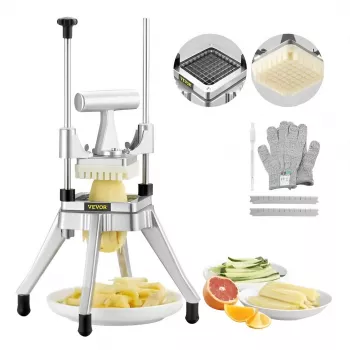
- Commercial Manual Vegetable Fruit Dicer Cutter 3/8″ & 1/4″ Stainless Steel
- Premium Laptop Sleeve for MacBook Air Pro 13-16 Inch with Protective Design
- 30W Portable Power Bank for Apple Devices
FAQ
Can it dice soft foods like tomatoes or ripe fruit?
It works best with firm produce; chilling soft items briefly and using steady, controlled pressure helps prevent crushing. Very ripe or mushy items may not cut cleanly and can leave more buildup in the grid.
What’s the difference between the 1/4″ and 3/8″ grids in real kitchen use?
The 1/4″ grid produces a finer dice that cooks faster and blends more evenly in salsas, toppings, and quick sautés. The 3/8″ grid keeps more texture for chunky dishes and holds up better in longer cooks.
How should the blade grid be cleaned safely?
Rinse soon after use, brush residue out with a non-metal brush, sanitize according to your food-safety procedures, and dry thoroughly before storage. Avoid scraping the blades with hard tools that can nick edges or bend the grid.





Leave a comment